Song Introduction
"I Miss Us" is a collaborative single by three of Eurovision's most distinctive voices: Joost Klein (Netherlands), Tommy Cash (Estonia), and Käärijä (Finland). Released in 2026, the track brings together the Dutch rapper-songwriter, the Estonian pop provocateur, and the Finnish chart-topper for an unexpectedly tender reflection on friendship, distance, and nostalgia.
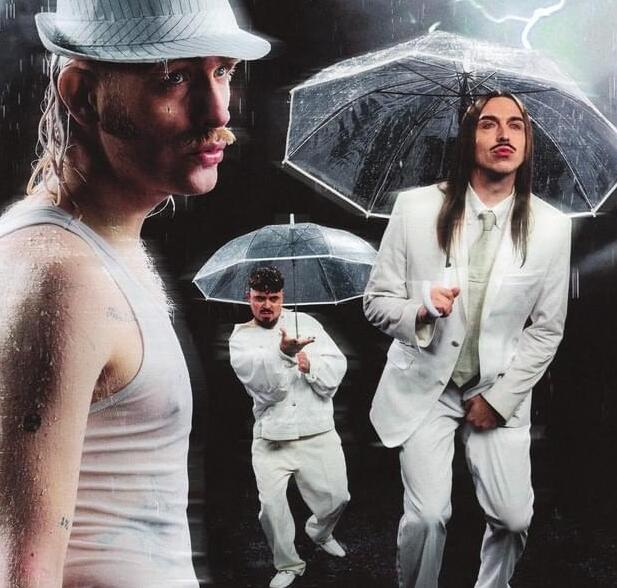
While all three artists are known for their high-energy, often chaotic stage personas—Käärijä with his iconic "Cha Cha Cha" performance, Tommy Cash with his surrealist humor, and Joost with his rapid-fire Dutch flows—"I Miss Us" strips back the bravado to reveal something more vulnerable. The song is built around a simple, repetitive hook that feels almost like a group chant, creating an intimate atmosphere that contrasts with their usual bombastic styles.
The track serves as both a love letter to their shared experiences on the road and a universal meditation on how success and distance can strain even the strongest bonds. With references to Basel, Malmö, and Liverpool—cities deeply tied to their Eurovision journeys—the song grounds its emotional core in real places and real memories.
Lyrics
[Intro: Joost]
Uh, Tommy Cash, Joost Klein, Käärijä, uh (u-uh)
[Verse 1: Tommy Cash, Joost, Käärijä & All]
I was in Basel, looking at stars
I was in Malmö, looking at cars
All the good things
All the bad things
In har-mony
I gotta say, that trip was cool
I had some fun in my hotel room
But, I felt alone in Liverpool
[Chorus: Tommy Cash, Joost, Käärijä & All]
I miss us, when I'm drinking in my flat all alone
I miss us, when I'm in my bed and scrolling my phone
I miss us, and the things we love to do the most
Hmm, I wish I never let you go
[Verse 2: Tommy Cash, Joost, Käärijä & All]
I was so green
I was so blue
I tried the best that I could do
What do you mean?
What do you do?
I tried my best, that's on my mother
It was all said and done
We just wanted number one
But in the end
It doesn't matter
Does it, does it?
[Chorus: Tommy Cash, Joost, Käärijä & All]
I miss us, when I'm drinking in my flat all alone
I miss us, when I'm in my bed and scrolling my phone
I miss us, and the things we love to do the most
Hmm, never switching up on my bro
[Verse 3: Käärijä, Joost & Tommy Cash]
I miss my family, I miss my brothers (Wooh)
Uh, hell yeah, motherfucker
I hope we see it soon, so it would be so cool (Wooh)
To see you, motherfucker
(Aye aye, bro, Tantu stop it)
Aye come on man, it's like a boyband song, bro
[Chorus: Tommy Cash, Joost, Käärijä & All]
I miss us, when I'm drinking in my flat all alone
I miss us, when I'm in my bed and scrolling my phone
I miss us, and the things we love to do the most
Hmm, Tommy, Käärijä and Joost
[Outro: All & Joost]
(Tommy, Käärijä and Joost)
(Tommy, Käärijä and Joost)
(Tommy, Käärijä and Joost)
Tommy, Käärijä and Joost
We should totally sell this to like a major label
Lyrics Meaning
Verse 1 – The Geography of Memory
The opening verse immediately establishes the song's emotional landscape through place names. Basel (host of Eurovision 2025), Malmö (host of Eurovision 2024, where Joost competed), and Liverpool (host of Eurovision 2023, where Käärijä made his historic run) are not just random cities—they are coordinates of their shared artistic journey. "Looking at stars" and "looking at cars" suggests the paradox of touring life: you're constantly surrounded by spectacle, yet often feel disconnected from what matters.
The line "I felt alone in Liverpool" is particularly poignant. Käärijä's Eurovision 2023 experience in Liverpool was a triumph—he won the public vote with "Cha Cha Cha"—yet even at the peak of success, loneliness crept in. The harmony of "all the good things" and "all the bad things" acknowledges that their bond was forged through both triumph and struggle.
Chorus – The Void of Absence
The chorus transforms a simple phrase—"I miss us"—into a mantra. The specificity of the imagery is what makes it resonate: "drinking in my flat all alone" and "scrolling my phone" are universal modern experiences of isolation. The "us" here is deliberately ambiguous—it could refer to a romantic partner, but given the artists' backgrounds and the verse that follows, it reads more like a platonic longing for the camaraderie of shared purpose.
The evolution of the final line across choruses tells its own story: from "I wish I never let you go" (regret) to "never switching up on my bro" (loyalty) to finally naming each other—"Tommy, Käärijä and Joost" (acceptance and celebration).
Verse 2 – The Cost of Ambition
This verse delves into the emotional toll of pursuing success. "I was so green / I was so blue" uses color symbolism effectively—green for inexperience, blue for melancholy. The repeated questioning ("What do you mean? / What do you do?") captures the confusion that comes when relationships strain under pressure.
The confession "We just wanted number one" is striking in its honesty. These are artists who have competed at Eurovision, where ranking and scores dominate the narrative. Yet the follow-up—"But in the end / It doesn't matter / Does it, does it?"—suggests a mature realization that chart positions and trophies pale in comparison to human connection.
Verse 3 – Brothers in Arms
Käärijä takes the lead here, and his verse brings the subtext to the surface: "I miss my family, I miss my brothers." The raw exclamations ("Wooh," "hell yeah, motherfucker") maintain his characteristic energy while serving genuine emotion. The meta-commentary at the end—"it's like a boyband song, bro"—is quintessential Tommy Cash/Joost humor, breaking the fourth wall to acknowledge how unexpectedly sentimental the track is.
This self-awareness prevents the song from becoming mawkish. By joking about the format, they remind us that masculinity (particularly in hip-hop and pop) often struggles to express vulnerability openly. Their solution? Lean into the cheesiness together, as brothers.
Outro – The Punchline and the Point
The outro's repetitive naming of the trio—"Tommy, Käärijä and Joost"—functions like a group hug in musical form. The final line, "We should totally sell this to like a major label," is hilarious and telling. After baring their souls, they retreat to business talk, as if embarrassed by their own openness. It's a perfect encapsulation of their collective persona: emotionally sincere but never without a wink.
Conclusion
"I Miss Us" works because it refuses to take itself too seriously, even while exploring genuinely moving territory. Joost, Tommy Cash, and Käärijä have built their brands on irony, absurdity, and high-energy performance—so when they collectively lower the mask, the effect is disarming.
The song captures a specific type of millennial/Gen-Z loneliness: the isolation that persists even when you're constantly connected, constantly touring, constantly "on." The flat, the bed, the phone—these are private spaces where the performance stops and the person remains.
For fans who followed these artists through their Eurovision journeys, the track offers a behind-the-scenes glimpse of the bonds formed backstage. For casual listeners, it's a relatable anthem about missing the version of yourself that existed in someone else's company. Either way, "I Miss Us" proves that sometimes the most radical thing chaotic artists can do is simply be sincere—and that sincerity, delivered with friends, becomes something even more powerful.
