A stark, cinematic contribution to War Child’s HELP(2) compilation that cuts deeper than any anthem.
Song Introduction
When Cameron Winter—the enigmatic frontman of Brooklyn art-rock provocateurs Geese—emerged from the studio with "Warning," he delivered something rare in the charity compilation space: a whisper that resonates louder than a scream. Released in March 2026 as part of War Child’s HELP(2) album (the 30-year sequel to the legendary 1995 benefit record), "Warning" marks Winter’s first proper solo release since his 2024 debut album Heavy Metal.
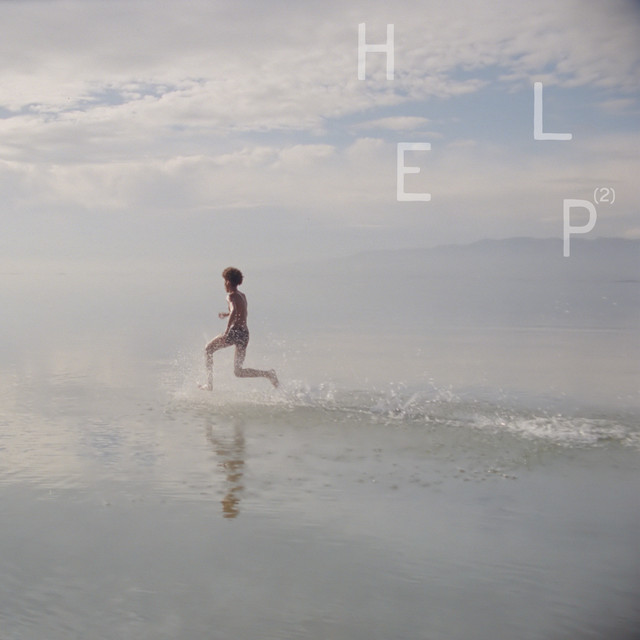
While HELP(2) boasts star-studded collaborations—from Arctic Monkeys to Olivia Rodrigo—Winter’s contribution stands apart through its radical restraint. Produced by James Ford, the track eschews the bombastic uplift typical of charity singles for something far more unsettling: a sparse, Hitchcockian soundscape where tension hangs like humidity before a storm. The song serves as both a literal warning about the fragility of safety in a world where nearly 1 in 5 children (520 million worldwide) are affected by armed conflict, and a metaphorical questioning of artistic authenticity in times of crisis.
Lyrics
Good morning
This is your warning
This is your warning
You're gonna appear before a stranger
I don't know if you'll be in any danger
For some are not pulled into moving cars
Some are not dragged down Fifth Avenue by the hairs in their ears
Some get away with it, some get away with it for many years
And are not punished, but some are"Winter
Is this the work of your life?
This is the work of a beginner
Look out there, it's the last prisoner, swaying
Look out there, it's your best friend, aging"
There's a tall far-off thing with eyes
Whose existence I cannot prove or disprove
Looking at everybody all the time
Every single day, but you're gonna find
It's not been looking at me in the same strange way that it's been looking at youMm, mm, mm
If you're not wrong and there's really nobody out there who can do the impossible
And who's gonna forgive you? (Who?)
Who is gonna forgive you?
Now, there is work to be done on the sides of your body
And there are hot things that are unusually long and they burn very badly
There are things I hope one day to hook around the corners of your mouth
There are plans that I have in this house, written down
And there are plenty of people that I can very easily call who can come over here within an hour
And do the work that must be done on your heart
There is so, so, so, so much work to be done on your heart
There is so much work to be done on your heart
And it's not the kind of work that you do around the house
My friend, this is your warningGood morning
(This is your warning)
(This is your warning)
(Fuck you, fuck you)
Lyrics Meaning
The central interrogation of "Warning"—"Is this the work of your life, or the work of a beginner?"—operates on multiple devastating levels. On the surface, it reads as an artist’s existential doubt, the 3 AM question that haunts creators: Are we honing a lifelong craft, or merely playing at mastery? But within the context of War Child’s mission, this line transforms into something far more urgent.
1. The Crisis of Authenticity
Winter’s delivery—a "dead-eyed nasal howl" backed by "hyper-tense, stabbing strings" reminiscent of the Kronos Quartet—suggests a scrutiny of intention. In a world where children are collateral damage, the song asks whether our responses (artistic, political, humanitarian) are the considered actions of mature conscience, or the impulsive reactions of amateurs ill-equipped for the weight of suffering. The minimalist production—sparse percussion, murmuring synths, cinematic restraint—mirrors this stripping away of pretense until only raw accountability remains.
2. Vigilance as Virtue
True to its title, "Warning" functions as an alarm system. The Hitchcockian string arrangements don’t resolve; they teeter on the edge of collapse, creating sonic anxiety that refuses catharsis. This mirrors the psychological state of populations living under conflict—where safety is temporary, and beauty exists adjacent to danger. Winter’s vocal performance, threading through the arrangement "like a whispered caution," embodies the necessary vigilance that the album’s beneficiaries (children in war zones) must maintain daily.
3. The Double Meaning of "Work"
The repetition of the central question—with each iteration stabbing deeper, as Winter’s technique often does—highlights the dual meaning of "work." It questions both the product (Is this artwork significant?) and the labor (Is this effort meaningful?). In the context of HELP(2), where artists donate their work to fund humanitarian aid, the line becomes a self-interrogation: Can art truly help, or is it merely a beginner’s attempt to grapple with complexities beyond comprehension?
Musical Composition & Context
Positioned directly after Fontaines D.C.’s thundering cover of Sinéad O’Connor’s "Black Boys on Mopeds," "Warning" creates a necessary breathe-in/breathe-out rhythm within the compilation. Where O’Connor’s protest is righteous fury, Winter’s is anticipatory dread.
The instrumentation choices are deliberate:
- Stabbing strings: Mimic the jolt of sudden realization
- Sparse percussion: Evokes the hollow echo of empty spaces (abandoned buildings, shelters)
- Murmuring synths: Suggest machinery or distant conflict
This isn’t a song meant to be sung along to; it’s meant to be survived.
Conclusion
"Warning" succeeds precisely because it refuses the easy redemption arc. In a compilation filled with anthems of hope and covers of familiar comfort songs, Winter offers something more valuable: honest unease. The track stands as a reminder that awareness—the state of being warned—is itself a form of action. As War Child’s statistics remind us that conflict affects more children now than at any time since WWII, Winter’s question—"Is this the work of your life, or the work of a beginner?"—becomes a challenge to every listener. Will our response to this warning be amateurish avoidance, or the masterful, sustained work of healing?
In the end, "Warning" is not just a song; it’s a mirror held up to a world at war, asking whether we’re ready to grow up and face the work that matters.
