- Song Introduction
- Full Lyrics
- Lyrics Meaning & Analysis
- Connection to Hayao Miyazaki's World
- Conclusion
Song Introduction
British singer-songwriter Paris Paloma, renowned for her haunting folk-pop narratives and ethereal vocal delivery, returns with "Miyazaki"—a raw, introspective anthem that pays homage to the legendary Japanese animator while dissecting the torturous beauty of artistic creation. Released as part of her evolving discography that bridges mythological storytelling with personal confession, the track strips back production to expose a pulsating heartbeat of acoustic vulnerability.
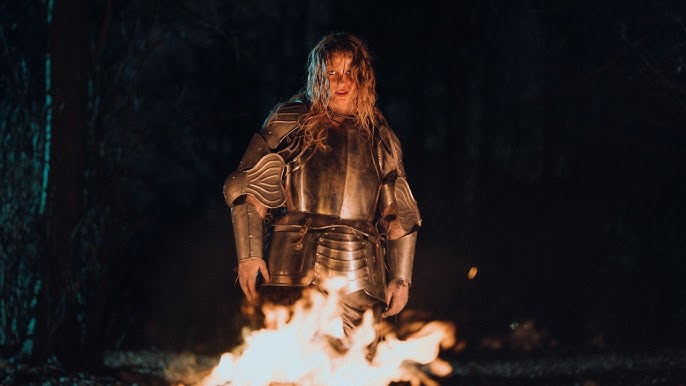
The title itself serves as a loaded signifier. Much like Hayao Miyazaki's cinematic worlds—where soot sprites coexist with nature spirits and children navigate liminal spaces between grief and wonder—Paloma constructs a sonic landscape where creativity is both salvation and sickness. "Miyazaki" isn't merely a tribute; it's a manifesto on the non-negotiable necessity of making art, even when the process collapses the creator like "a star" imploding under its own gravity.
Full Lyrics
[Verse 1]
I have something to say
As has anyone who's ever made
Anything worth enjoying
Nobody can destroy it
Left unchecked it mutates
Bleeding desperation to create
Collapses me like a star
Sickness inside my heart
I have something to say
As has anyone who's ever made
Anything worth enjoying
Nobody can destroy it
Left unchecked it mutates
Bleeding desperation to create
Collapses me like a star
Sickness inside my heart
[Verse 2]
Whenever I fear death I think of that which I would fear much more
Never dying, is that what you all are striving for
I leave a stream of greenery in every path I walk
Chased by a monster of a thousand voices that always wants
One more
Whenever I fear death I think of that which I would fear much more
Never dying, is that what you all are striving for
I leave a stream of greenery in every path I walk
Chased by a monster of a thousand voices that always wants
One more
[Chorus]
Please don't ever take it from me
Changes the colour of the air that I breathe
Please don't ever take it from me
Changes the colour of the air that I breathe
[Verse 3]
In grief's fertile land
The space in between clapping hands
They say it'll pass
I used to pray that it would
But its absence never brought anything good
I wake in the morning
Do all of my chores then
Of thinking in silence
And drinking sweet wine
Putting my mind somewhere outside
Where it can feel the sun
Maybe it'll connect with someone
In grief's fertile land
The space in between clapping hands
They say it'll pass
I used to pray that it would
But its absence never brought anything good
I wake in the morning
Do all of my chores then
Of thinking in silence
And drinking sweet wine
Putting my mind somewhere outside
Where it can feel the sun
Maybe it'll connect with someone
[Pre-Chorus]
The world's the world
And I'm a person in a tiny body
I vow to live
I won't let fear be anything that stops me
I'm not a violent person but I make things with aggression
I'm not a violent person but my work is one exception
The world's the world
And I'm a person in a tiny body
I vow to live
I won't let fear be anything that stops me
I'm not a violent person but I make things with aggression
I'm not a violent person but my work is one exception
[Chorus]
I won't let you take it from me
Changes the colour of the air that I breathe
I won't let you take it from me
Changes the colour of the air that I breathe
[Bridge]
I wasn't always tortured
I made art long before then
I call into the void until I lose my voice but
Sometimes a cry reverberates back
A child with mud caked hands
Or a prolific and obsessive older man
I'd do it unpaid, unseen, unthanked
It's worth more than anything that I have
(You can never have it ever, you can never have it ever, you can never have it ever)
I wasn't always tortured
I made art long before then
I call into the void until I lose my voice but
Sometimes a cry reverberates back
A child with mud caked hands
Or a prolific and obsessive older man
I'd do it unpaid, unseen, unthanked
It's worth more than anything that I have
(You can never have it ever, you can never have it ever, you can never have it ever)
[Outro]
I won't let you take it from me
Changes the colour of the air that I breathe
I won't let you take it from me
Changes the colour of the air that I breathe
I won't let you take it from me
I won't let you take it from me
Changes the colour of the air that I breathe
I won't let you take it from me
Changes the colour of the air that I breathe
I won't let you take it from me
Lyrics Meaning & Analysis
The Compulsion to Create
In the opening verse, Paloma establishes creation not as choice but as physiological imperative. The imagery of something that "mutates" and "bleeds desperation" reframes artistic blocks as physical hemorrhaging. When she describes the creative impulse collapsing her "like a star," she invokes both celestial destruction and the loneliness of burning brightly in void-like isolation. This "sickness inside my heart" isn't romanticized; it's presented as a chronic condition that accompanies anyone who has "made anything worth enjoying."
Mortality vs. Immortality
The second verse delivers the song's philosophical pivot. Paloma subverts the typical fear of death, revealing that stagnation—"never dying"—terrifies her more than mortality. This existential stance mirrors Miyazaki's own ethos: his films often explore impermanence (the spirits in Spirited Away fading, the transforming landscapes in Howl's Moving Castle) while celebrating the urgency of living. The "stream of greenery" she leaves behind suggests environmental consciousness but also creative legacy—a verdant trail marking her finite passage through the world.
The Monster of a Thousand Voices
The "monster of a thousand voices" haunting Paloma serves as the antagonist of the narrative. It represents the insatiable demand for "one more"—more content, more tours, more perfection, more productivity. In Miyazaki's universe, such multi-voiced creatures often mask vulnerability (like the No-Face consuming everything yet seeking connection). Here, the monster embodies both external industry pressures and internalized expectations, chasing the artist down every path she walks.
Grief as Fertile Ground
Verse three excavates the paradox of suffering's utility. "Grief's fertile land" suggests that emotional devastation provides nutrients for growth, contradicting the platitude that pain simply "passes." Paloma admits she once prayed for relief until discovering "its absence never brought anything good"—a stark admission that creativity and melancholy are symbiotic. The domestic imagery of morning chores, silent thinking, and wine transforms mundane survival into ritual preparation for art-making. Her mind seeks the sun not for warmth, but for connection, echoing Miyazaki's recurring motif of flight and aerial perspective as means of transcending earthly isolation.
The Violence of Making
The pre-chorus confronts the aggression inherent in creation. Paloma insists on her non-violent nature while acknowledging her "work is one exception." This tension—between peaceful person and forceful art—reflects the Studio Ghibli aesthetic where gentle protagonists often confront catastrophic destruction (Princess Mononoke's pacifist Ashitaka navigating war, or The Wind Rises' Jiro designing machines of beauty that become engines of war). The "aggression" isn't malicious; it's the ferocious protectiveness required to wrestle ideas into existence.
The Sacred Unpaid
The bridge reaches emotional crescendo by returning to childhood purity—"mud caked hands" evoke Miyazaki's young protagonists (Mei in My Neighbor Totoro, Kiki in Kiki's Delivery Service) whose power resides in unselfconscious engagement with the world. The declaration that she'd create "unpaid, unseen, unthanked" strips art down to its essential spiritual value. The parenthetical chant ("You can never have it ever") becomes an exorcism against commodification, insisting that the creative spirit remains inalienable property.
Connection to Hayao Miyazaki's World
The song's title operates as a thematic skeleton key. Miyazaki's films consistently explore:
-
The sanctity of small lives ("I'm a person in a tiny body")
-
Nature as sentient and sacred ("stream of greenery")
-
Monsters as misunderstood forces (the thousand-voiced pursuer)
-
Flight as liberation (the mind placed outside to feel sun)
-
Childhood resilience (mud-caked hands creating regardless of audience)
Paloma channels the kaze (wind) that flows through Miyazaki's work—the invisible force that carries soot sprites, propels castle walks, and signals change. Like Miyazaki's protagonists who often begin isolated and end connected, Paloma's narrator moves from solitary collapse ("collapses me like a star") to hopeful outreach ("Maybe it'll connect with someone").
Conclusion
"Miyazaki" stands as Paris Paloma's defense of the ungovernable creative spirit. It refuses the wellness-industry narrative that demands artists heal before producing, instead arguing that the "sickness" and the song are inextricable. The repeated refusal in the outro—"I won't let you take it from me"—transforms from plea to battle cry, defending the "colour of the air" that artistic passion provides.
In honoring the Japanese master, Paloma joins a lineage of creators who understand that to make art is to accept a beautiful haunting. Like Chihiro clutching her true name in Spirited Away, Paloma clutches her creative identity against forces that would consume it. The result is a track that doesn't just describe the artistic process—it enacts it, bleeding desperation until it blooms into something that, like all Miyazaki's best creations, feels simultaneously ancient and urgently new.
