Song Introduction
"Ribcage" is the third single from Filipino-American pop artist Bella Poarch's long-awaited debut studio album, released on May 1, 2026 through Warner Records. The track arrives after a prolonged and transformative creative journey that saw Poarch completely overhaul her album's direction, discarding earlier singles "Crush" and "Bad Boy!" in favor of a darker, more introspective sound that better reflects her artistic evolution.
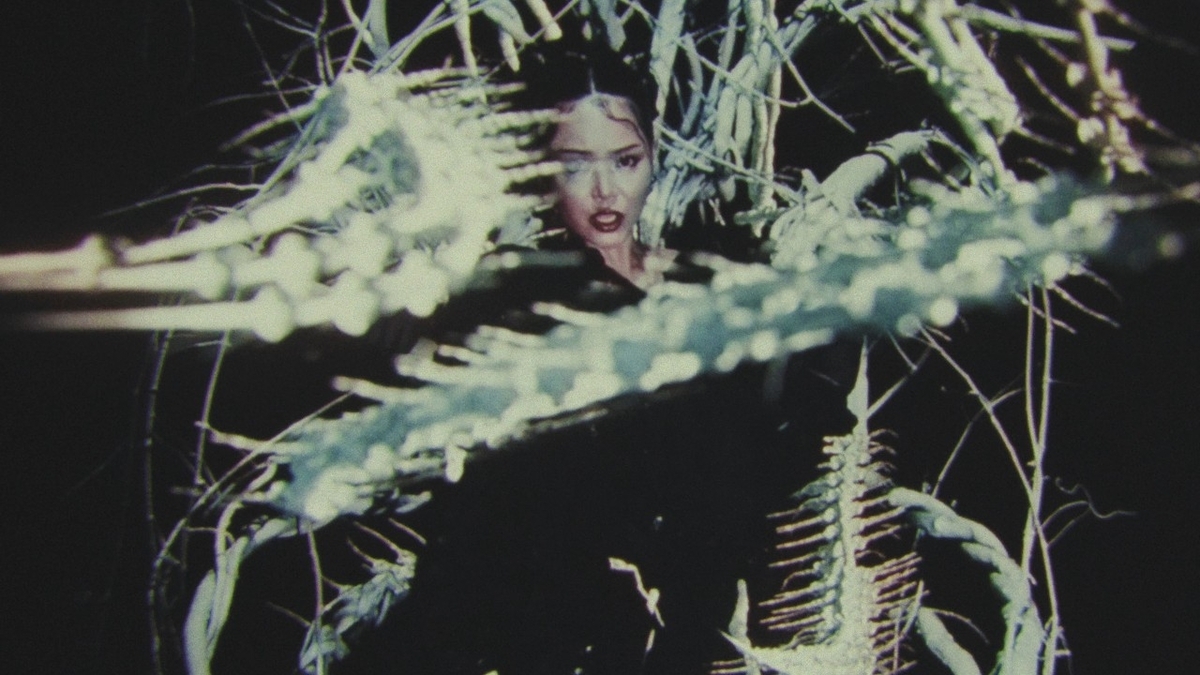
The song was officially announced on April 17, 2026, when Poarch shared a snippet with the caption: "guys thank you for sticking with me through it all. you've cracked the code! we finally made it out the studio!!" She described "Ribcage" as an invitation into her world — "something dear to me and it's time for me to be brave, open up and be vulnerable." The single's cover art features "Tooth," one of the characters from her album's conceptual universe, confirming that every song on the project is associated with a specific character — an ambitious narrative framework that extends Poarch's visual storytelling from her TikTok origins into full-scale album artistry.
During an interview at the Billboard Women in Music 2026 event, Poarch confirmed that "Ribcage" would serve as the announcement vehicle for her debut album, revealing that the project explores both her "best and worst moments" through what she describes as the contrast of "beautiful, dreamy production with very dark lyrics." This aesthetic duality — the sonic sweetness masking lyrical devastation — has become Poarch's signature, and "Ribcage" represents its most refined expression to date.
Lyrics
[Verse 1]
I think I sleep too much
Flowers are overgrown
Under my bed
My thoughts turn into dust
I watch them decompose
Inside my head
[Pre-Chorus]
Come along, do you wanna see?
Don't know what is wrong, what is wrong with me
Think it's been too long and I'm in too deep
Oh, think I'm
[Chorus]
Living in a dream
Or maybe it's a nightmare
Is there an in between?
I think I wanna die there
Looking for my ribcage
I don't feel my bones
I don't wanna stay here
But I don't have a home
Living in a dream
Or maybe it's a nightmare
[Verse 2]
I don't like medicine
I'd rather eat my brain
'Cause what's the use?
When I'll wake up again
And pour it down the drain
It's nothing new
[Pre-Chorus]
Come along, do you wanna see?
Don't know what is wrong, what is wrong with me
Think it's been too long and I'm in too deep
Oh, think I'm
[Chorus]
Living in a dream
Or maybe it's a nightmare
Is there an in between?
I think I wanna die there
Looking for my ribcage
I don't feel my bones
I don't wanna stay here
But I don't have a home
Living in a dream
Or maybe it's a nightmare
Lyrics Meaning
Verse 1: The Garden of Neglect
The song opens with a confession that inverts typical expectations about depression: "I think I sleep too much." Where insomnia is the more commonly discussed symptom of mental illness, Poarch identifies excessive sleep as her escape mechanism — a way of avoiding consciousness that has become so routine it requires acknowledgment. The image that follows — "Flowers are overgrown / Under my bed" — transforms the childhood fear of monsters beneath the mattress into something more melancholic. The flowers, symbols of life and beauty, have been neglected so completely that they have grown wild in the hidden spaces, suggesting that even positive things become threatening when left unattended.
The sequence "My thoughts turn into dust / I watch them decompose / Inside my head" offers one of the song's most striking images. Thoughts are not merely forgotten or suppressed; they are actively breaking down, returning to elemental matter. The verb "watch" is crucial — Poarch is not passive in this process but observant, a witness to her own cognitive decay. This creates a disturbing doubling: she is both the site of decomposition and the consciousness that registers it, trapped in a body that is failing while a mind remains just clear enough to document the failure.
Pre-Chorus: The Invitation to Witness
The pre-chorus shifts from solitary confession to direct address: "Come along, do you wanna see?" This is both genuine invitation and bitter challenge. Poarch is asking her listener to enter the space she has described, to witness the overgrown flowers and decomposing thoughts, but there is also an edge of defiance — you think you want to see, but do you really? The admission "Don't know what is wrong, what is wrong with me" rejects easy diagnosis. She has no label, no explanation, only the accumulated weight of time: "Think it's been too long and I'm in too deep."
The truncated final line — "Oh, think I'm" — creates a moment of suspended syntax, as if language itself has become inadequate to complete the thought. This grammatical incompleteness mirrors the psychological state being described: a self that cannot be fully articulated, a condition that resists naming.
Chorus: The Anatomy of Dislocation
The chorus delivers the song's central paradox with devastating clarity. "Living in a dream / Or maybe it's a nightmare / Is there an in between?" The question is not rhetorical; it is genuine philosophical inquiry. Poarch is trying to locate her experience on the spectrum between pleasant illusion and terrifying vision, and finding that the categories have collapsed. There is no "in between" because the dream and the nightmare have become indistinguishable — the same altered state that offers escape also inflicts damage.
The line "I think I wanna die there" is the song's most disturbing moment, and its most ambiguous. "There" refers to the dream/nightmare state, suggesting that Poarch has found something in this liminal space preferable to waking life — even if that something is death. This is not a suicidal ideation in the conventional sense but a desire for the cessation of distinction, the end of the exhausting oscillation between dream and nightmare, between sleep and consciousness, between hope and despair.
The image of "Looking for my ribcage / I don't feel my bones" transforms anatomical reality into metaphorical crisis. The ribcage is the structure that protects the heart and lungs, the architectural center of bodily vulnerability. To search for it suggests a disconnection so profound that even physical boundaries have become uncertain. "I don't feel my bones" is both literal (the numbness that accompanies deep depression or dissociation) and figurative (the loss of structural integrity, the sense that one's body no longer provides reliable containment).
The final lines of the chorus — "I don't wanna stay here / But I don't have a home" — articulate the fundamental condition of displacement that defines the song. "Here" is the dream/nightmare state, the consciousness she inhabits; "home" is the security and belonging that would make staying elsewhere possible. Without a home, there is no alternative to the dream; without the dream, there is nowhere to be. This is the trap that "Ribcage" documents with unflinching precision.
Verse 2: The Rejection of Cure
The second verse opens with a declaration that complicates any straightforward reading of the song as a cry for help: "I don't like medicine / I'd rather eat my brain." This is not merely a preference for natural over pharmaceutical intervention; it is a preference for self-destruction over external aid. To "eat my brain" is to consume the organ of thought, to destroy the very thing that generates the suffering — a radical solution that rejects the incrementalism of treatment in favor of total transformation.
The justification that follows — "'Cause what's the use? / When I'll wake up again / And pour it down the drain / It's nothing new" — reveals the cyclical nature of Poarch's despair. Medicine, therapy, all the interventions that promise progress, only create temporary relief that is inevitably washed away. The drain is both literal (the bathroom sink where pills might be discarded) and metaphorical (the void into which all efforts disappear). "It's nothing new" is the final resignation — not a statement about the present moment but about the entire pattern of attempted recovery and inevitable relapse.
The Character of Tooth: Visualizing the Internal
While not present in the lyrics themselves, the song's association with the character "Tooth" — revealed in the single's cover art and confirmed as part of the album's conceptual framework — adds a visual dimension to the textual analysis. Teeth are structures of breaking down, of rendering the external world into digestible pieces; they are also sites of vulnerability (cavities, extraction, pain) and presentation (the smile that communicates wellness despite internal damage). The character of Tooth likely embodies these contradictions: the machinery of consumption that is itself consumed by decay, the protective structure that requires protection, the visible organ that hides its own fragility.
In this context, "Ribcage" becomes not merely a song about individual depression but a contribution to a larger mythology — the story of a body and its various components, each with its own character, its own struggles, its own relationship to the whole. The ribcage that Poarch cannot feel is Tooth's architectural counterpart: the structure that should protect but has become imperceptible, the bones that should provide shape but have dissolved into the dream.
Conclusion
"Ribcage" represents Bella Poarch's most accomplished and emotionally direct work to date — a song that fulfills the promise she made in interviews about exploring her "best and worst moments" through the contrast of beautiful sound and devastating content. The track's dreamy, almost lullaby-like production creates a sonic environment that initially suggests comfort, only to reveal, upon closer listening, that the comfort is a trap, the dream is a nightmare, and the only certainty is the absence of home.
The song's placement as the third single from her debut album — following "Sweet Delusion" and "Will You Always Love Her?" — suggests a narrative progression from illusion to attachment to dislocation. Where "Sweet Delusion" explored false perception and "Will You Always Love Her?" examined romantic insecurity, "Ribcage" locates the source of these surface concerns in a deeper structural crisis: the loss of bodily awareness, the dissolution of boundaries between self and void, the preference for death in the dream over life in the nightmare.
Poarch's decision to associate each song with a character — "Tooth" in this case — represents an innovative approach to album conceptualization that draws on her background in visual storytelling. The TikTok creator who once built a following through expressive facial gestures and character-driven content has translated that skill into a musical framework where songs are not merely tracks but inhabitants of a world, each with its own visual identity, its own mythology, its own relationship to the album's central themes.
The critical reception of "Ribcage" will likely focus on its unflinching honesty about mental health — the refusal to offer easy redemption, the rejection of medicine as panacea, the willingness to articulate desires (to die in the dream, to eat one's own brain) that polite discourse excludes. But the song's true achievement lies in its formal integration of these dark themes with genuinely beautiful melodic construction. Poarch has not simply documented despair; she has made it singable, memorable, almost sweet — the "beautiful, dreamy production with very dark lyrics" that she identified as her aesthetic goal.
As Poarch prepares to announce her full debut album — using "Ribcage" as the vehicle for this long-awaited revelation — the song stands as evidence of an artist who has outgrown her viral origins without abandoning the visual imagination that made her famous. The girl who lip-synced her way to the most-liked TikTok video in platform history has become a songwriter capable of articulating the unspeakable, a vocalist who can make decomposition sound like a lullaby, and a conceptual artist who sees her own body as a landscape of characters, each with their own stories to tell. "Ribcage" is the story of the structure that protects what is most vital, and of the terrifying moment when that structure becomes imperceptible — when the bones that should hold us together dissolve into the dream from which we cannot wake.
