Song Introduction
JPEGMAFIA (born Barrington DeVaughn Hendricks, also known as "Peggy") deploys "Mask On," the fourteenth track from his 2026 album EXPERIMENTAL RAP, released on May 21, 2026 via AWAL. Clocking in at 2 minutes and 34 seconds, the song is one of the album's most structurally repetitive and thematically concentrated cuts—a track built around a single mantra-like chorus that transforms the act of robbery into a meditation on identity, performance, and survival. Written, produced, and mixed entirely by JPEGMAFIA himself, the track sits at a crucial juncture in the album, following the nuclear metaphor of "TSAR BOMBA" and preceding the spiritual minimalism of "His Will."
The title "Mask On" immediately evokes multiple layers of meaning. In street culture, a mask is literal protection during criminal activity—concealment from surveillance cameras, witnesses, and law enforcement. But in the COVID-19 era and beyond, the mask has also become a symbol of public health, social responsibility, and collective trauma. For JPEGMAFIA, who has built his career on exploring the intersections of Black identity, digital culture, and political paranoia, "Mask On" functions as both a heist narrative and a commentary on the masks we all wear—whether to commit crimes, survive pandemics, or navigate the performative demands of social media. The track's relentless chorus—"Put on the mask, get the Glock, it's time to rob, nigga"—is not just a call to action; it is a ritual, a rhythmic incantation that prepares the body and mind for transgression.
2026 has been a watershed year for JPEGMAFIA. Beyond releasing what he calls his "era-defining magnum opus," he contributed to BTS's comeback album ARIRANG on the track "FYA," produced for Ye and Ty Dolla Sign's Vultures 1, and saw Beyoncé feature his song "don't rely on other men" during her Cowboy Carter Tour. He also served as an opening act for Linkin Park's global "From Zero" stadium tour and is set to embark on his own 20-date North American Experimental Rap Tour this autumn, with European festival appearances at Lowlands, Pukkelpop, All Points East, and Electric Picnic. "Mask On" arrives in this context as both a return to underground rap fundamentals and a sophisticated commentary on the surveillance state—reminding listeners that in JPEGMAFIA's world, the mask is never just a mask, and the robbery is never just about money.
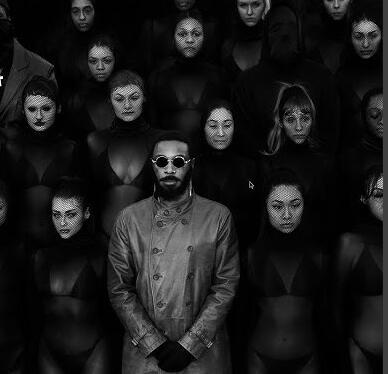
Lyrics
[Chorus]
Put on the mask, get the Glock, it's time to rob, nigga (Let's go)
Put on the mask, get the Glock, it's time to rob, nigga
Put on the mask, get the Glock, it's time to rob, nigga (Go, go, go, go)
Put on the mask, get the Glock, it's time to rob, nigga (Go, go, let's go, let's go, let's go, let's go)
Put on the mask, get the Glock, it's time to rob, nigga (Go, go, go, go)
Put on the mask, get the Glock, it's time to rob— (Go, go)
[Verse 1]
Mask up, cut the light, if the guard dog bark, shut his ass up (Swerve)
Ash blunts, on the White House sofa, no sir, we do not punt (Swerve, swerve)
Passed up, honey in your blood and you still can't keep that trash up
You mad sus, if you can't get your own buzz, don't speak on who's doin' what (What?)<
You niggas, you really ain't built for All Madden, you floppin' the plays, you can never be captain (Swerve)
Your GF be cappin', I'm fuckin' that bitch with no wrapper
Your bitches be fuckin' these rappers (Swerve, swerve)
Your bitches be fuckin' on me and then callin' you cappin', I know that you wonder what happened (What?)<
I'm fuckin' your bitch, am I trollin' or smashin'? I get to packagin', she bendin' it backwards
I get to the bag, made the beat, then I mixed it, I wrote it, know AWAL is payin' me cash (Huh)
I got heat in the stash and my bitch lookin' like Baby Bash, and I'm payin' for titties and ass (Huh, swerve, swerve)
You niggas be rappin' with rats, the toolie is black, same rifle I had in Iraq (Swerve)
My bitches be bad, my bitches be sexy, they cracked, you noticed another nigga wife was—
[Chorus]
Put on the mask, get the Glock, it's time to rob, nigga
Put on the mask, get the Glock, it's time to rob, nigga (Okay)
Put on the mask, get the Glock, it's time to rob, nigga (Go, go, go, go)
Put on the mask, get the Glock, it's time to rob, nigga (Go, go, let's go, let's go, let's go, let's go)
Put on the mask, get the Glock, it's time to rob, nigga (Go, go, go, go)
Put on the mask, get the Glock, it's time to rob, nigga (Go, go)
[Verse 2]
I got your bitch, you not gettin' her back, she on her knees for the way that I rap (Swerve)
You know that be cap, these little boys can't touch me like Ep—<
These little boys can't touch me like Hammer (Swerve, swerve)
Wiggin' on niggas like Joan the Scammer, so full of hate, they be speakin' in slander (What?)<
Speakin' on niggas like they was handlers, your bitch off the white, sniffin' that Chelsea Handler
So many Dracos, think you in Atlanta, paper like Kinko's, we throwin' them bands up
Treat 'em like Waco, shoot 'em till we vanish, no, treat him like JFK, pop at his dandruff
Treat 'em like JFK, give 'em a taper, I got a mask on, I'm not a crusader
Fuckin' that bitch and she know that I hate her, she holdin' me down like that bitch on retainer (Baow)
Hittin' that light and clutchin' that pipe, everything out here get swiped (Swiped)
You gettin' iced, no locked doors, baby girl, I don't like
They not typin' 'bout your life, you not relevant, you not liked
I am a dog, you is a rat, I don't fuck with mice, can't believe I gotta say this twice
[Chorus]
Put on the mask, get the Glock, it's time to rob, nigga (Let's go)
Put on the mask, get the Glock, it's time to rob, nigga (Let's go, let's go, let's go, let's go)
Put on the mask, get the Glock, it's time to rob, nigga (Go, go, go, go)
Put on the mask, get the Glock, it's time to rob— (Go, go, let's go, let's go, let's go, let's go)
[Outro]
You are not alone
Lyrics Meaning
Chorus: The Ritual of Preparation
The Chorus of "Mask On" is a hypnotic, militaristic incantation that dominates the track's structure. "Put on the mask, get the Glock, it's time to rob, nigga" is repeated six times in the first iteration alone, with variations in ad-libs—"Let's go," "Go, go, go, go," "Okay"—that create a sense of escalating urgency. This is not just a description of criminal preparation; it is a ritual of transformation. The mask is donned, the weapon is acquired, and the self is reconfigured for transgression. The repetition suggests that this process is not unique but habitual, a cycle of preparation and execution that has become routine.
The word "nigga" at the end of each line functions as both address and self-reference. JPEGMAFIA is speaking to his crew, to his listeners, to himself. The command is universal: anyone who hears this chorus is being recruited into the robbery, being asked to assume the mask and the weapon and the intention. The parenthetical ad-libs create a call-and-response dynamic that mirrors military cadence or religious liturgy. This is prayer as preparation, hymn as heist planning. The "Go, go, go, go" that punctuates later iterations transforms the chorus from static instruction to kinetic action—we are no longer preparing; we are moving.
Verse 1: The White House, the Game, and the Iraq Connection
Verse 1 opens with a series of rapid-fire images that collapse the domestic, the political, and the criminal into a single compressed narrative. "Mask up, cut the light, if the guard dog bark, shut his ass up" establishes the physical parameters of the break-in: darkness, silence, violence against obstacles. The "Swerve" ad-lib that follows each line suggests evasion, sudden movement, the unpredictable trajectory of someone who is always dodging capture. The White House reference ("Ash blunts, on the White House sofa, no sir, we do not punt") is one of the track's most politically charged moments. To smoke cannabis on the White House sofa is to occupy the seat of American power while rejecting its laws, its norms, its "sir." The "punt" reference connects to football—American football, specifically—but also to the phrase "punt on an issue," meaning to defer or avoid confrontation. JPEGMAFIA rejects both meanings: he does not avoid confrontation, and he does not play by the rules of the game.
The "honey in your blood" reference ("Passed up, honey in your blood and you still can't keep that trash up") is cryptic but suggestive. "Honey" could refer to sweetness, to wealth, to a term of endearment; in your blood, it becomes genetic, inherent, inescapable. And yet you still fail—you cannot "keep that trash up," cannot maintain the performance, cannot sustain the lie. The "mad sus" reference ("You mad sus, if you can't get your own buzz, don't speak on who's doin' what") uses Gen Z slang ("sus" = suspicious) to criticize those who gossip about others while failing to achieve their own success. If you cannot generate your own attention ("buzz"), you have no right to comment on those who can.
The All Madden reference ("You niggas, you really ain't built for All Madden, you floppin' the plays, you can never be captain") connects to the highest difficulty setting in the Madden NFL video game series. All Madden is for experts, for those who have mastered the game's mechanics; his opponents are not even built for this level of competition. "Floppin' the plays" suggests both failure and theatricality—they are not just losing; they are performing their incompetence. The "wrapper/wrapper" wordplay ("I'm fuckin' that bitch with no wrapper / Your bitches be fuckin' these rappers") merges contraception (no condom) with artistic packaging (no label, no commercial sheen). He is having raw sex and making raw music; his rivals' partners are attracted to commercial success ("rappers" as a generic category) rather than authentic artistry.
The "cappin'" reference ("Your bitches be fuckin' on me and then callin' you cappin'") uses slang for lying or exaggerating. After sleeping with JPEGMAFIA, these women return to their partners and accuse them of dishonesty—presumably about their own sexual prowess or fidelity. The "trollin' or smashin'" reference ("I'm fuckin' your bitch, am I trollin' or smashin'?") questions his own motivations. Is he sleeping with these women to provoke their partners (trolling), or is he genuinely attracted to them (smashing)? The ambiguity is deliberate—he may not know himself, or he may be both simultaneously. The "packagin'" reference ("I get to packagin', she bendin' it backwards") connects to drug dealing (packaging product) and sexual positioning (bending backward), suggesting that his sexual and commercial activities are indistinguishable.
The AWAL reference ("know AWAL is payin' me cash") names his distribution company, a rare moment of corporate transparency in a verse otherwise devoted to criminal opacity. The Baby Bash reference ("my bitch lookin' like Baby Bash") compares his partner to the Mexican-American rapper known for his smooth, commercial sound—a surprising comparison that may suggest aesthetic preference or simply visual resemblance. The "titties and ass" reference confirms that his partner's appearance has been surgically enhanced, and that he paid for it—a transaction that blurs the line between romantic investment and commercial improvement. The Iraq reference ("same rifle I had in Iraq") is one of the track's most startling autobiographical details. JPEGMAFIA served in the U.S. Air Force and was deployed to Iraq; the rifle he now references in a rap verse is the same weapon he carried in a war zone. The boundary between military and civilian violence dissolves; the tool is the same, only the target has changed.
Verse 2: The Scammer, the Handler, and the Assassination
Verse 2 opens with a claim of permanent possession: "I got your bitch, you not gettin' her back." This is not a temporary loan; it is confiscation. The reason she stays—"she on her knees for the way that I rap"—suggests that his artistic skill is itself a form of sexual power, that his words compel physical submission. The "cap" reference ("You know that be cap") dismisses any contradiction as lies; the truth is his sexual dominance, and everything else is falsehood.
The Epstein/Hammer wordplay ("These little boys can't touch me like Ep— / These little boys can't touch me like Hammer") is a masterful piece of self-censorship and cultural reference. Jeffrey Epstein was a financier and sex offender who died in prison; MC Hammer was a rapper known for his massive success and subsequent financial ruin. The aborted "Ep—" suggests that the comparison was too dark, too dangerous, too legally perilous to complete. The "little boys" cannot touch him like either figure—cannot reach his level of criminality or his level of commercial success. The Joan the Scammer reference ("Wiggin' on niggas like Joan the Scammer") connects to a viral internet personality known for fraudulent schemes and dramatic confrontations. To "wig" on someone is to attack their hair/wig, to expose their artificiality; JPEGMAFIA sees himself as similarly destructive of others' facades.
The "handlers" reference ("Speakin' on niggas like they was handlers") suggests that his critics speak about him as if they controlled him, as if they had authority over his narrative. The Chelsea Handler reference ("your bitch off the white, sniffin' that Chelsea Handler") is a complex piece of wordplay. Chelsea Handler is a comedian and television host; "off the white" suggests cocaine use, and "sniffin' that Chelsea Handler" transforms her name into a drug brand. The Draco reference ("So many Dracos, think you in Atlanta") connects to the Romanian-made pistol that has become a staple of trap music and Atlanta hip-hop culture. To have so many Dracos is to have so much firepower that your location becomes indistinguishable from the genre's capital.
The Kinko's reference ("paper like Kinko's, we throwin' them bands up") compares their money to the output of a copy shop—voluminous, identical, endlessly reproducible. "Bands" are stacks of cash; to throw them up is to display wealth conspicuously. The Waco reference ("Treat 'em like Waco, shoot 'em till we vanish") connects to the 1993 siege of the Branch Davidian compound in Texas, where federal agents and cult members engaged in a deadly confrontation. To "treat 'em like Waco" is to destroy completely, to leave no survivors, to become invisible ("vanish") in the aftermath. The JFK reference ("treat him like JFK, pop at his dandruff") is one of the track's most chilling images. President Kennedy was assassinated by a head shot; "pop at his dandruff" suggests shooting so close to the scalp that you target flakes of dead skin. The precision is surgical; the violence is casual. The "taper" reference ("give 'em a taper") connects to a haircut style, suggesting that the assassination doubles as grooming—violence as aesthetic improvement.
The "crusader" reference ("I got a mask on, I'm not a crusader") distinguishes his masked criminality from historical religious warfare. The Crusaders wore crosses and claimed divine sanction; JPEGMAFIA wears a mask and claims nothing. His violence is secular, pragmatic, unideological. The "retainer" reference ("she holdin' me down like that bitch on retainer") transforms his partner into a legal instrument—a retainer is both a dental device and a fee paid to secure someone's services. She holds him down physically and financially, a dual form of support that is also a form of dependency. The "swiped" reference ("everything out here get swiped") connects to both theft (swiping a credit card) and dating apps (swiping left or right). In JPEGMAFIA's world, everything is transactional, everything is subject to appropriation, and even romance is a form of robbery.
The final lines—"I am a dog, you is a rat, I don't fuck with mice, can't believe I gotta say this twice"—establish a zoological hierarchy of masculinity. He is the dog (loyal, aggressive, pack-oriented); his rivals are rats (scavenging, diseased, untrustworthy); and he does not associate with mice (insignificant, easily crushed). The repetition—"can't believe I gotta say this twice"—expresses exhaustion with having to explain what should be obvious. The hierarchy is self-evident; the only surprising thing is that anyone fails to recognize it.
Outro: The Solitary Comfort
The Outro—"You are not alone"—is a single line that arrives after two and a half minutes of relentless aggression, sexual conquest, and criminal preparation. It is shocking in its tenderness, its reassurance, its almost therapeutic quality. After commanding us to put on masks, get guns, rob, kill, and dominate, JPEGMAFIA offers a message of solidarity. You are not alone in your mask. You are not alone in your violence. You are not alone in your fear.
But the line also carries darker undertones. In the context of surveillance culture, "You are not alone" is a threat as much as a comfort. The government is watching. The cameras are recording. The algorithms are tracking. You are never alone, and that is precisely the problem. The mask is supposed to provide anonymity, but the Outro suggests that anonymity is an illusion. Someone is always with you, always watching, always waiting. The mask does not conceal; it merely transforms. And in the end, we are all masked, all armed, all ready to rob—and all desperately, irreparably alone together.
Conclusion
"Mask On" is one of the most structurally audacious and thematically dense tracks on EXPERIMENTAL RAP, a song that uses the repetitive framework of a heist anthem to explore questions of identity, surveillance, and masculine performance. In just over two and a half minutes, JPEGMAFIA constructs a world where the White House is a smoking lounge, where video game difficulty settings determine social hierarchy, where Iraq War rifles become studio props, and where presidential assassinations are treated as barber shop appointments.
What makes this track extraordinary is its refusal to separate the political from the personal, the historical from the absurd. The mask is not just a criminal accessory; it is a pandemic survival tool, a social media avatar, a psychological defense mechanism. The Glock is not just a weapon; it is a prop, a phallus, a symbol of American masculine anxiety. The robbery is not just about money; it is about redistribution, about taking what has been denied, about forcing recognition from a system that renders you invisible.
The song's placement on EXPERIMENTAL RAP is significant. It follows "TSAR BOMBA," with its nuclear metaphor and pop-culture density, and precedes "His Will," one of the album's shortest and most spiritually direct tracks. "Mask On" serves as the album's turning point—the moment where the accumulated aggression of the first half is channeled into ritual, into repetition, into the hypnotic preparation for action. It suggests that before any transformation, any transcendence, any "will" can be exercised, there must be the mask. There must be the concealment. There must be the willingness to become someone else, someone harder, someone capable of doing what the unmasked self cannot.
Ultimately, "Mask On" is a song about the costs of visibility and the seductions of anonymity. In an era of total surveillance, where every action is recorded and every identity is performative, the mask offers a fleeting fantasy of escape. But the Outro—"You are not alone"—reminds us that escape is impossible. The mask does not hide us from others; it reveals us to ourselves. And what it reveals is not pretty. It is armed, it is aggressive, it is ready to rob. But it is also human, also frightened, also reaching out for connection in the dark. The mask is on. The Glock is loaded. The robbery is about to begin. And in the silence before the action, a voice whispers: You are not alone. Whether this is comfort or threat depends on which side of the mask you are standing.
