Song Introduction
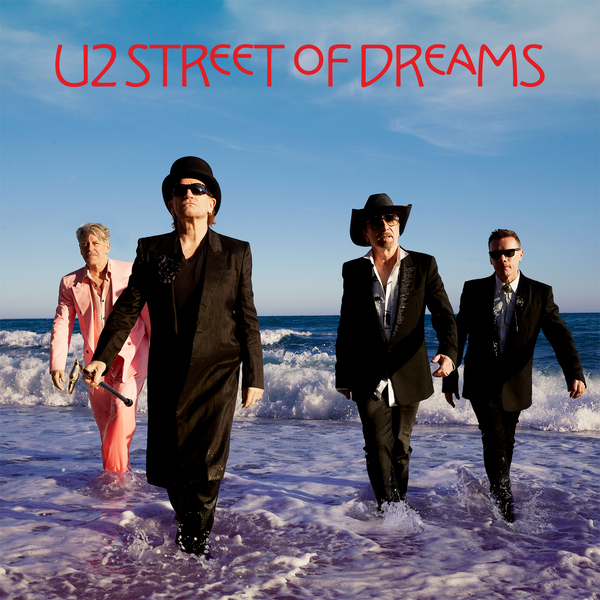
U2 released their new single 「Street of Dreams」 on July 7, 2026, marking the band's first new material in nine years and the lead single from their upcoming studio album, their first full-length collection of new music since 2017's Songs of Experience. The single arrives at a pivotal moment — the band is celebrating its 50th anniversary this year, having formed in Dublin in September 1976.
The song is deeply intertwined with a short film of the same name, created in partnership with Street Child United and Bank of America. The film, which premiered on July 8, 2026, follows a young girl named Calle whose life is disrupted by homelessness, yet who refuses to abandon her dream of playing football. David Beckham appears as a symbolic inner voice encouraging her to keep believing, while Bono and the other members of U2 feature near the conclusion. A specially edited 30-second version of the film is scheduled to air during FOX and Telemundo's North American broadcasts of the FIFA World Cup semi-finals and final beginning July 13.
The music video was filmed in Mexico City in May 2026, with U2 performing atop a customized school bus decorated by Mexican graffiti artist Chavis Mármol. The bus, painted with chains, roses, and thorns, bore the words "La Calle de los Sueños" — "The Street of Dreams" — on its front. The band also attended the 2026 Street Child World Cup Finals in Texcoco, Mexico, with drummer Larry Mullen Jr. even handling the coin toss for the final match. The tournament saw 30 teams from around the globe compete, organized by Street Child United, an organization that uses the power of sports to give street-connected young people a voice.
Bono has described the upcoming album as having "a more defiantly joyful kind of feel to take on these anxious times… almost a carnival vibe," calling it "more songs of celebration than lamentation." The release is expected in late September or early October 2026, timed to coincide with the band's 50th anniversary.
Lyrics
[Intro]
God, hear me shout
Lend Your ear to my prayer
When I'm far from anywhere
Down to my last breath of air
God, hear me shout
Lend Your ear to my prayer
When I'm far from anywhere
Down to my last breath of air
[Chorus]
La calle, calle de los sueños
All the doors are open on the street of dreams
La calle, calle de los sueños
Broken are the chosen on the street of dreams
[Verse 1]
Be here
Be free
Be yourself
And then free me
Your fate? (Gonna fight it)
Your trust? (Won't be denied)
This bus? (Gonna ride it)
To the street of dreams
[Chorus]
La calle, calle de los sueños
Justice, an obsession on the street of dreams
La calle, calle de los sueños
Love in a procession down the street of dreams
[Verse 2]
Break out
Break through
Break in
Your dream needs you
Your life? (Gonna find you)
Your fear? (Not gonna blind you)
Random angels? (Gonna guide you)
To the street of dreams
[Chorus]
La calle, calle de los sueños
All the doors are open on the street of dreams
La calle, calle de los sueños
Broken are the chosen on the street of dreams
[Bridge]
Don't you give up on your dreams
For the many and not just the few
Don't you give up, and your dreams
Won't give up on you
[Chorus]
La calle, calle de los sueños
Justice, an obsession on the street of dreams
La calle, calle de los sueños
Love in a procession down the street of dreams
[Outro]
God, hear me shout
Lend Your ear to my prayer
When I'm far from anywhere
Down to my last breath of air
Lyrics Meaning
A Prayer from the Margins
The song opens with a raw, desperate plea: "God, hear me shout / Lend Your ear to my prayer / When I'm far from anywhere / Down to my last breath of air." This is not the polished prayer of the comfortable — it is the cry of someone at the absolute edge of existence, geographically and spiritually displaced. The repetition of this verse at both the beginning and end of the song creates a bookend structure, suggesting that the journey through the "street of dreams" begins and ends in the same place of vulnerability. The speaker is not asking for wealth or fame; they are asking to be heard, to be seen, to be acknowledged when they have nothing left.
The Street of Dreams: A Place of Paradox
The central metaphor of the song — "La calle, calle de los sueños" — is rich with paradox. In one breath, U2 tells us that "All the doors are open on the street of dreams," suggesting infinite possibility and accessibility. In the next, they declare that "Broken are the chosen on the street of dreams," acknowledging that those who walk this path are often wounded, fractured, and carrying the weight of their past. The street of dreams is not a pristine boulevard — it is a real street, with real cracks in the pavement, where hope and hardship coexist.
The use of Spanish — "La calle de los sueños" — is deeply significant. It grounds the song in the Latin American context where the video was filmed and where the Street Child World Cup took place. But it also universalizes the message: dreams are not the property of any one language or culture. The street belongs to everyone who dares to walk it.
Justice and Love as Driving Forces
The second chorus introduces two powerful themes: "Justice, an obsession on the street of dreams" and "Love in a procession down the street of dreams." Justice is not presented as an abstract ideal but as an obsession — something that consumes you, that you cannot stop thinking about. This reflects U2's long-standing commitment to social justice, from their activism against apartheid to their support for debt relief in developing nations. Love, meanwhile, is not static; it moves. It is a procession, a march, a collective movement of people walking together toward something better.
The Call to Action
The verses are structured as imperatives — commands to the listener and to the self. "Be here / Be free / Be yourself / And then free me." This is a call to presence, to authenticity, and to mutual liberation. The speaker cannot be free alone; their freedom is bound up in the freedom of others. The parenthetical responses — "(Gonna fight it)", "(Won't be denied)", "(Gonna ride it)" — turn the song into a call-and-response, a gospel-like affirmation of resistance and determination.
The second verse intensifies this: "Break out / Break through / Break in / Your dream needs you." Here, the dream is not something passive that happens to you; it is something that requires your active participation. You must break out of confinement, break through barriers, and break into new spaces. The fear will not blind you, and random angels — perhaps the strangers who help us when we least expect it — will guide you.
The Promise of Reciprocity
The bridge offers the song's most hopeful message: "Don't you give up on your dreams / For the many and not just the few / Don't you give up, and your dreams / Won't give up on you." This is a promise of reciprocity. Dreams are not one-sided; if you hold onto them, they hold onto you. The phrase "for the many and not just the few" is explicitly political, rejecting the idea that dreams are the privilege of the wealthy or the powerful. It is a democratization of hope — everyone deserves to dream, and everyone deserves to see those dreams realized.
The Bus as a Symbol
The reference to "This bus? (Gonna ride it)" is more than a literal description of the music video's iconic school bus. The bus is a vehicle of transformation — it carries people from one place to another, from despair to hope, from isolation to community. In the video, the bus is decorated with chains and roses, a visual metaphor for the coexistence of bondage and beauty. The thorns at the back remind us that the journey is not without pain, but the roses promise that something beautiful can grow even in difficult soil.
Conclusion
「Street of Dreams」 is U2 at their most spiritually urgent and politically engaged. After nearly a decade of silence in terms of new full-length albums, the band returns not with a nostalgic retread of their greatest hits but with a song that speaks directly to the crises of our time — homelessness, displacement, the erosion of hope, and the desperate need for justice.
The song's power lies in its simplicity. The lyrics are not dense with metaphor or buried in abstraction; they are direct, almost prayer-like in their clarity. The Spanish chorus gives the song a global resonance, while the structure — opening and closing with the same desperate prayer — reminds us that the journey toward our dreams is circular. We begin in need, we walk through hope, and we return to need, but we are changed by the walking.
For U2, a band that has spent 50 years using rock music as a vehicle for social change, 「Street of Dreams」 feels like both a homecoming and a new beginning. It is a song that asks us not to look away from the broken, but to see them as the chosen — the ones who, precisely because they have been broken, understand the true value of the dream. In a world that often feels like it is closing its doors, U2 reminds us that on the street of dreams, all the doors are open. We just need the courage to walk through them.
